




Stacking Cups Toy
The humble Stacking Cups Toy is widely considered one of the most versatile and high-value toys a child can own. While they look simple to an adult, for a developing brain, they are a multi-tool for mastering physics, math, and motor control.
- Estimated Delivery : Up to 4 business days
- In Dhaka City Express Delivery Possible
Here is a breakdown of the developmental benefits of Stacking Cups Toy :
1. Fine and Gross Motor Skills
Stacking Cups Toy requires a surprising amount of physical “calibration.”
-
The “Release” Motion: Learning exactly when to let go of a cup so it stays on the tower is a major milestone in muscle control.
-
Crossing the Midline: Reaching across their body to grab a cup and bring it to the center helps bridge the left and right hemispheres of the brain.
-
Hand-Eye Coordination: Aligning the rims of two cups requires precise visual and manual synchronization.
2. Early Math and Language Concepts
Stacking Cups Toy are essentially a physical “calculator” for toddlers.
-
Size Discrimination: Children learn the concepts of “big,” “small,” “bigger,” and “smaller” through trial and error.
-
Spatial Vocabulary: You can teach prepositions like “under,” “over,” “inside,” and “on top” while playing together.
-
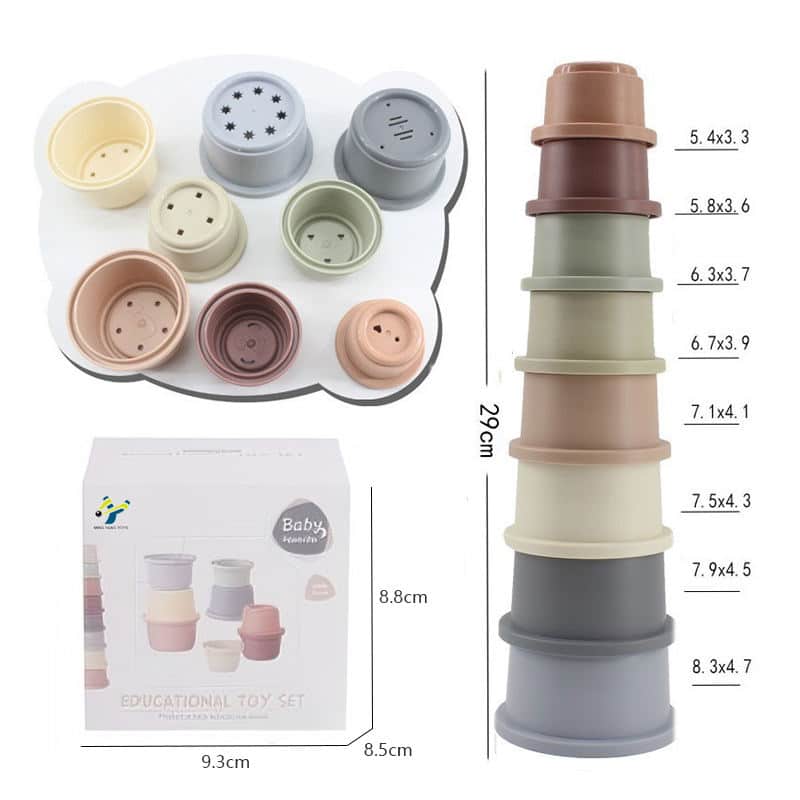
Sequencing: Understanding that the cups must be stacked in a specific order (largest to smallest) is the foundation for logical sequencing and computer coding logic.
3. Cognitive Concepts: “Nesting” vs. “Stacking”
Stacking Cups Toy teaches two distinct ways of organizing the world:
-
Stacking (Vertical): Building up teaches gravity and balance.
-
Nesting (Internal): Fitting one cup inside another teaches volume and spatial awareness (knowing that a larger object cannot fit into a smaller one).
4. Open-Ended and Sensory Play
Because they are hollow and durable, Stacking Cups Toy transition perfectly into other environments:
-
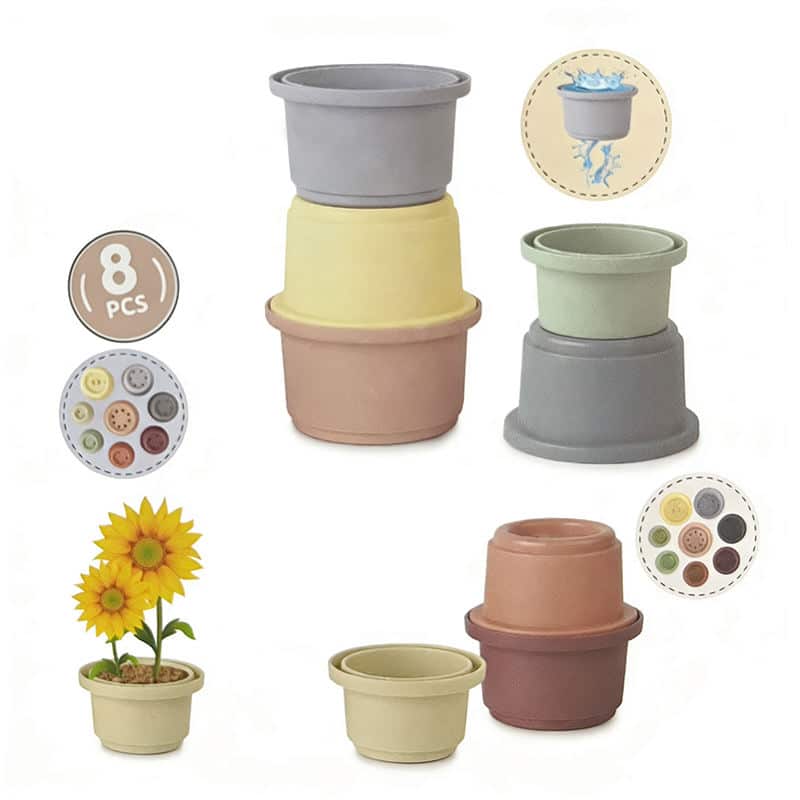
Water Play: Many cups have holes in the bottom, turning them into “rainmakers” in the bath, which teaches children about flow and volume.
-
Sand Play: They act as perfect molds for building sandcastles or “baking” sand cakes.
-
Color Recognition: Most sets use primary and secondary colors, making them a great tool for “color sorting” games.
5. Emotional Resilience (The “Crash” Factor)
One of the most important (and fun) parts of stacking is knocking the tower down.
-
Cause and Effect: “If I hit this, it falls.”
-
Social Interaction: It’s often a child’s first “collaborative” game—you build it, they knock it down, and you both laugh.
-
Persistence: It teaches them to start over and try again when things don’t go as planned
Be the first to review “Stacking Cups Toy”
Related products
-
Musical Piano Rattle Box
Original price was: 1,000৳ .890৳ Current price is: 890৳ . -
Rope Game Logical Thinking Toy
Original price was: 850৳ .590৳ Current price is: 590৳ . -
Fishing Paradise
Original price was: 4,000৳ .3,500৳ Current price is: 3,500৳ . -
Space Multi-functional Activity Toy
Original price was: 1,050৳ .850৳ Current price is: 850৳ . -
Jigsaw Puzzle Hand Grasp Plate
Original price was: 350৳ .290৳ Current price is: 290৳ .



Reviews
There are no reviews yet.