
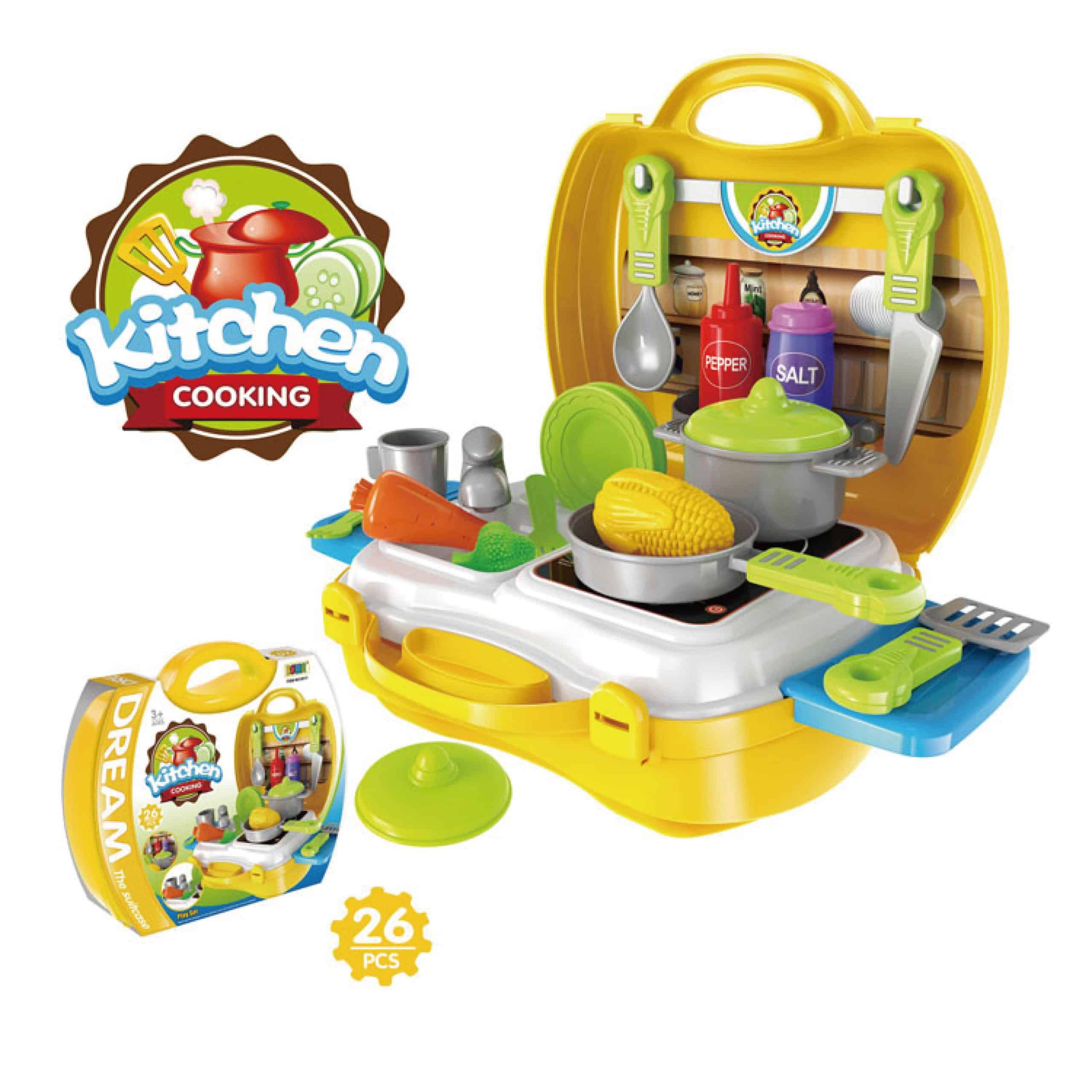
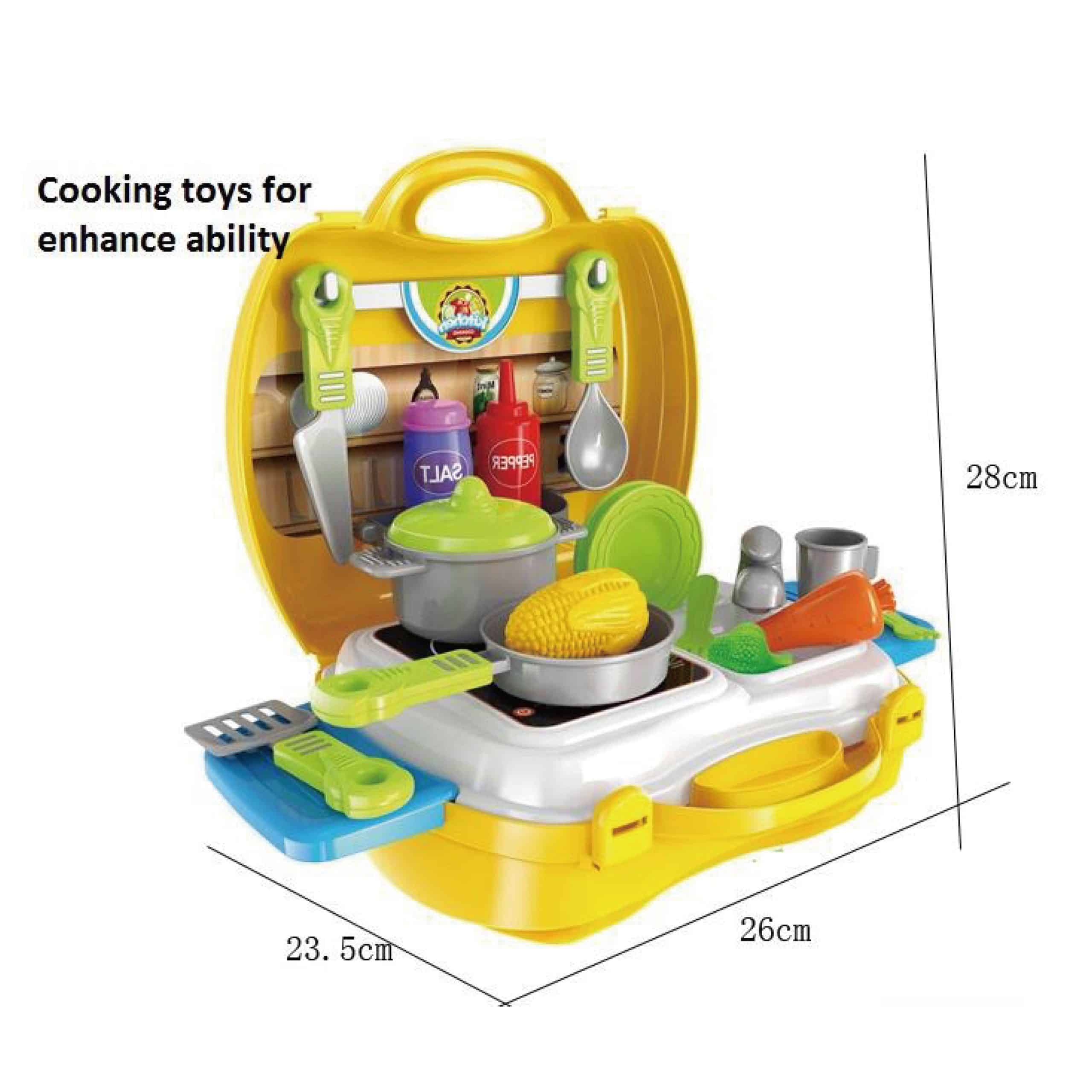
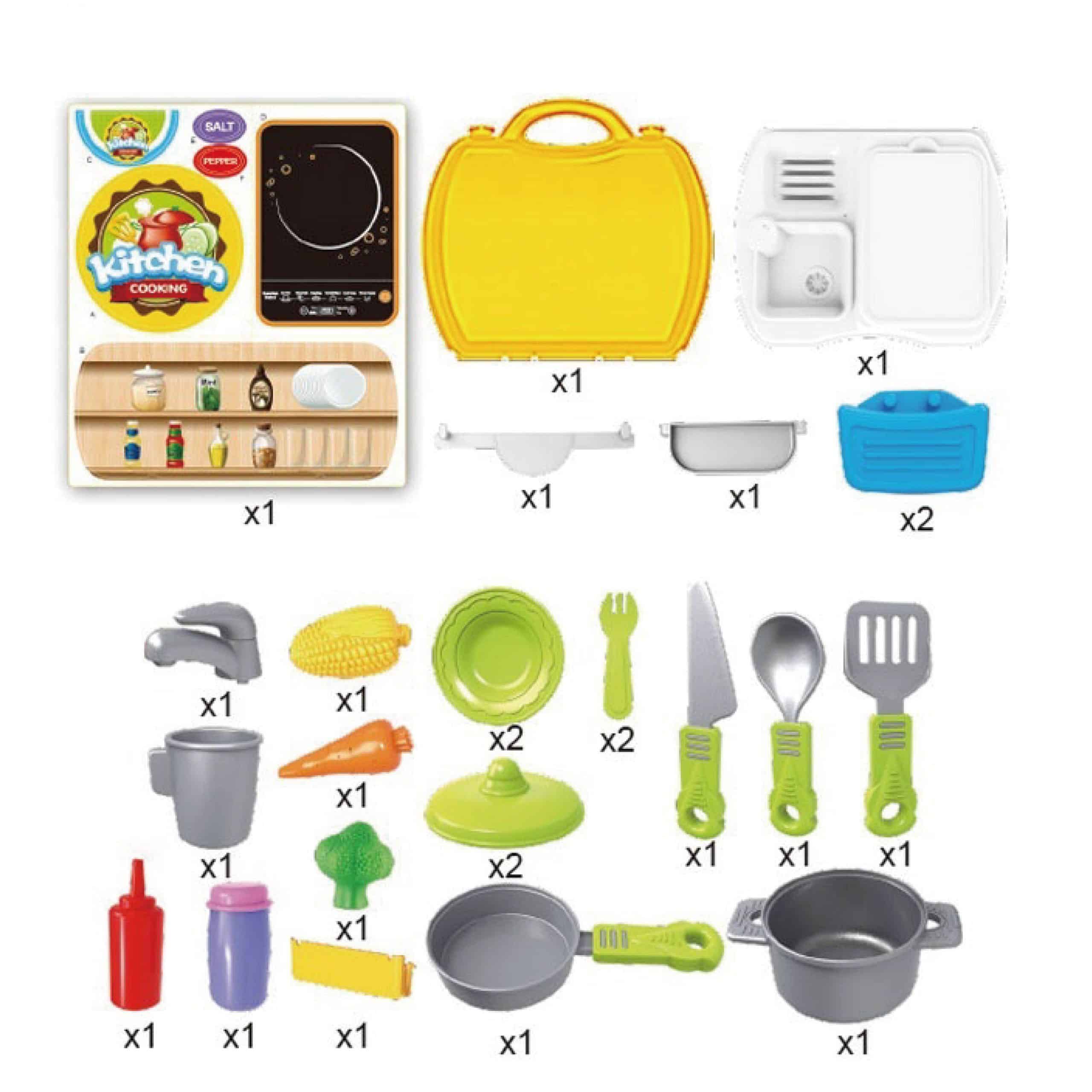
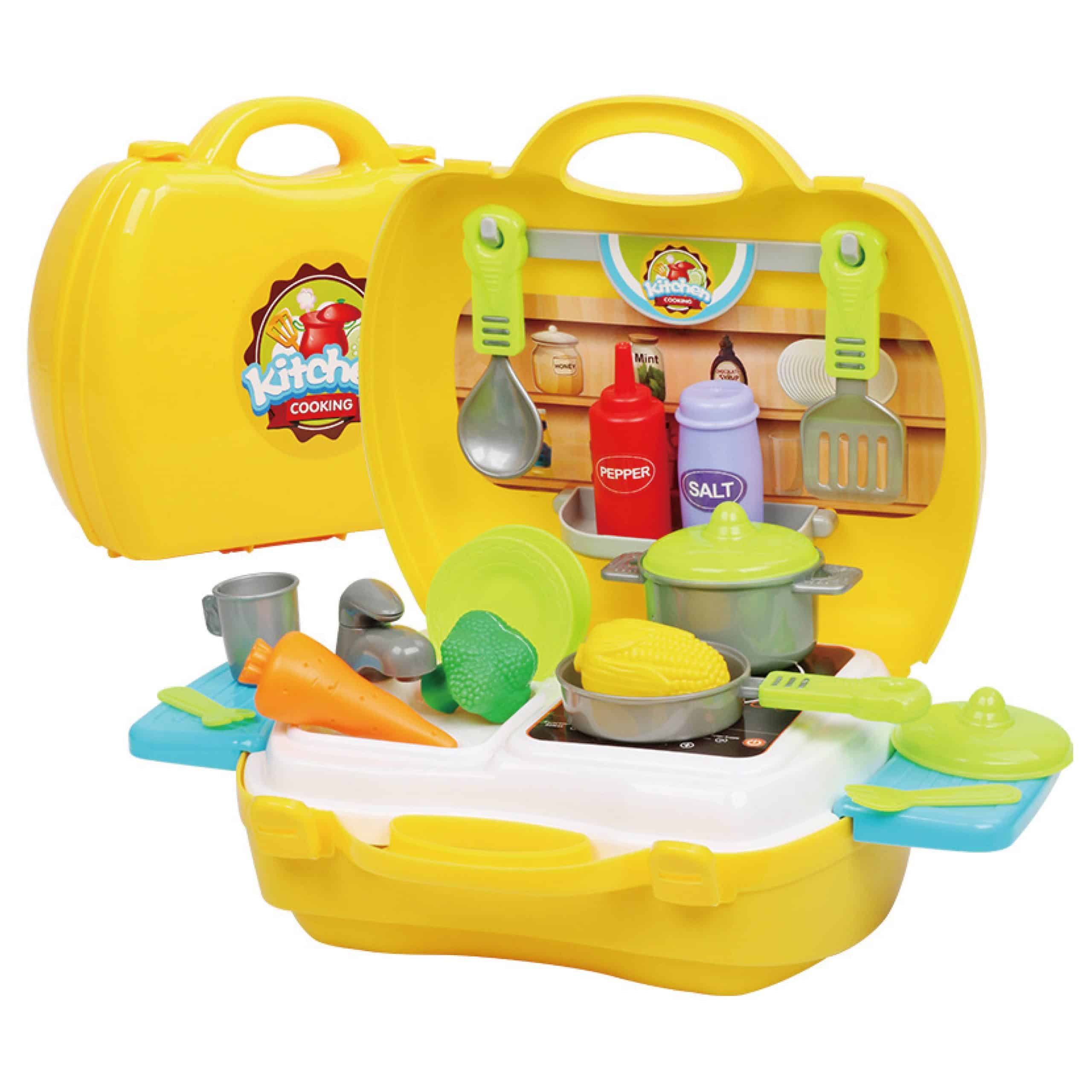
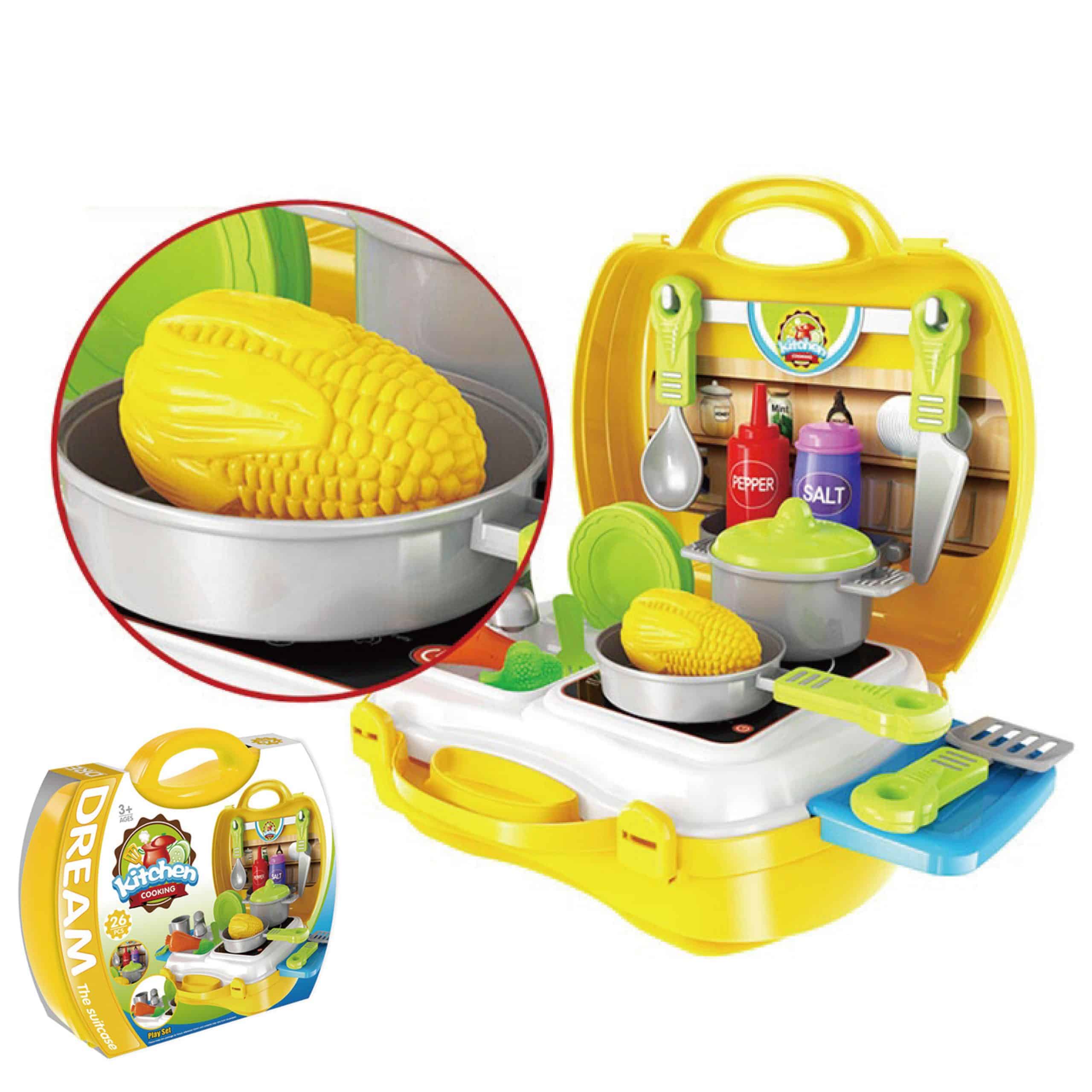
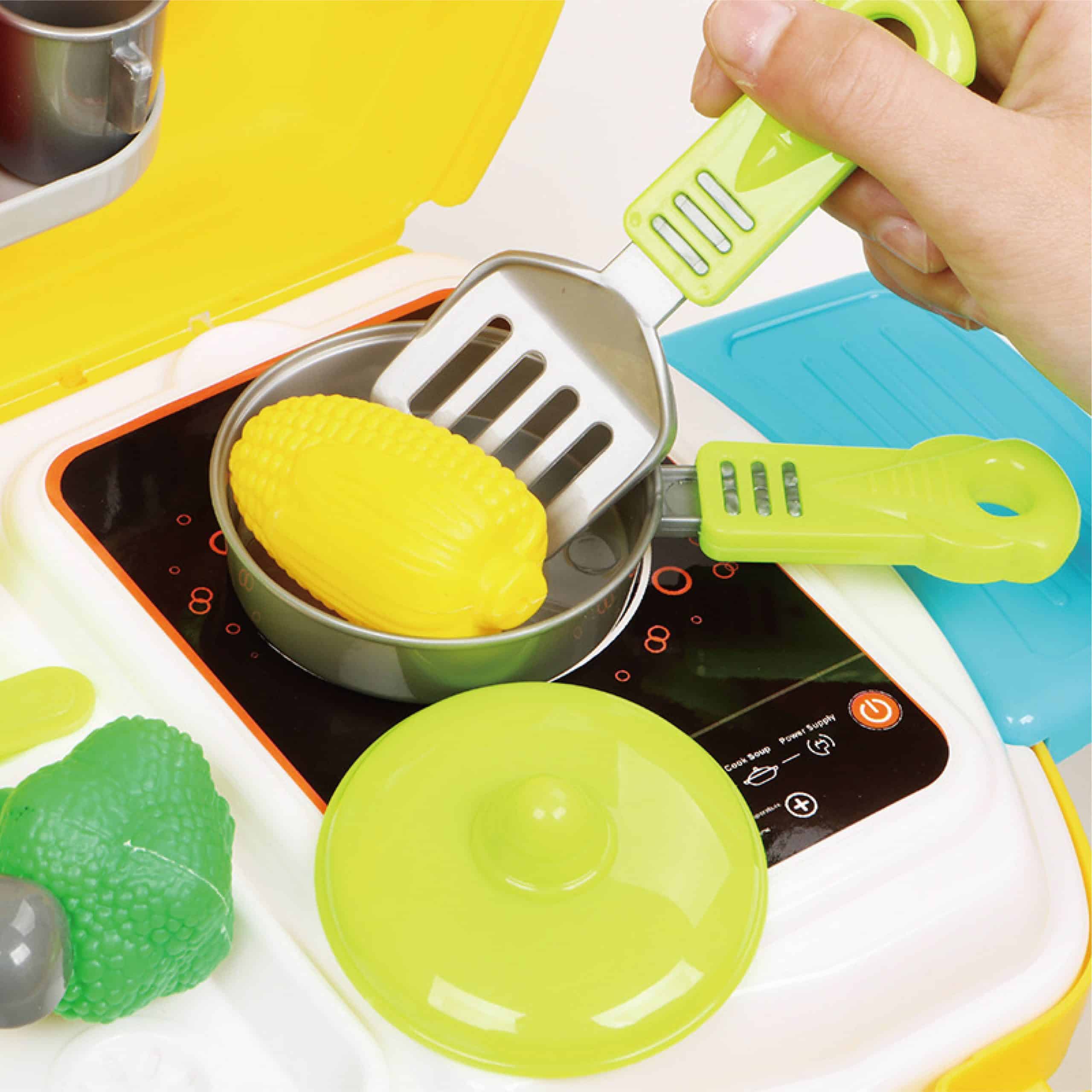


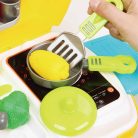
DIY Toys Kitchen Play Set
DIY Toys Kitchen Play Set—whether they are assembled from cardboard boxes, built from scratch with wood, or customized with snap-together pieces—are goldmines for early childhood development.
While any play kitchen is great, the DIY aspect adds a massive layer of developmental value for kids, transforming them from passive consumers into active creators.
- Estimated Delivery : Up to 4 business days
- In Dhaka City Express Delivery Possible
1. The Power of “I Made It!” (Confidence & Problem Solving)
When kids participate in building, decorating, or setting up their own kitchen space, it does wonders for their self-esteem.
-
Creative Ownership: Painting the stove burners, picking where the shelves go, or turning an old plastic bottle into a soap dispenser teaches them resourcefulness.
-
Spatial Engineering: Figuring out how boxes fit together or where to hang utensils fosters early spatial awareness and structural problem-solving.
2. Lifeskill Mimicry & Symbolic Play
Children learn by watching and mimicking the adults around them. DIY Toys Kitchen Play Set allows them to safely process real-world routines they see every day:
-
Safety Context: They learn the concepts of hot stoves, sharp knives, and careful handling without any real danger.
-
Symbolic Thinking: Using a wooden block as a stick of butter or a crumpled piece of red paper as a tomato builds abstract thinking—the foundation for advanced cognitive development and imagination.
3. Executive Function & Sequencing
DIY Toys Kitchen Play Set is a multi-step process that requires organization. When kids play “chef,” they are actually training their brain’s executive functioning skills through planning:
-
First, we wash the vegetables in the sink.
-
Next, we chop them up on the board.
-
Then, we put them in the pot to cook.
-
Finally, we serve it on a plate and clean up. Following this logical flow strengthens their memory, patience, and understanding of cause and effect.
4. Language Expansion & Vocabulary Boost
A kitchen set is a natural conversation starter. As kids play alone or with you, they absorb and practice a wide variety of verbs, adjectives, and nouns:
-
Action Verbs: Chop, stir, bake, boil, pour, scrub.
-
Descriptive Words: Hot, cold, spicy, sweet, heavy, empty.
-
Categorization: Grouping items into “fruits,” “vegetables,” “dishes,” or “utensils” helps them organize information in their minds.
5. Fine Motor Precision & Grip Strength
Manipulating kitchen tools is fantastic physical therapy for small hands.
-
Hand-Eye Coordination: Pouring pretend water from a pitcher into a small cup or balancing a play egg on a spoon requires steady hands.
-
Grip & Twisting: Turning tiny stove knobs, opening tight Velcro play-food seams with a toy knife, and using tongs to pick up “ingredients” exercises the exact finger muscles needed for writing.
6. Cooperative & Emotional Play
Kitchen play is inherently social. When playing with siblings or friends, it becomes a lesson in real-world social dynamics:
-
Negotiation & Empathy: They must decide who gets to be the chef and who is the customer. They learn to share utensils and wait for their “food” to cook.
-
Nurturing Instincts: Serving a meal to a parent or a stuffed animal allows kids to practice taking care of others, which builds emotional intelligence and empathy.
Be the first to review “DIY Toys Kitchen Play Set”
Related products
-
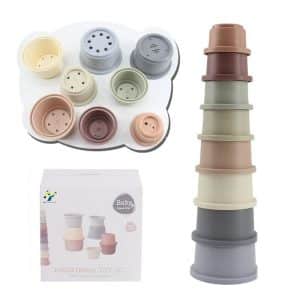
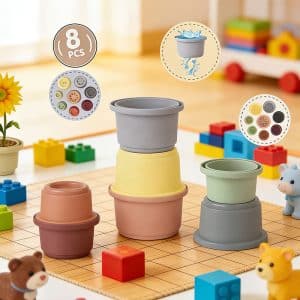
Stacking Cups Toy
Original price was: 550৳ .390৳ Current price is: 390৳ . -


-
Girl Make Up Toys
Original price was: 1,350৳ .1,050৳ Current price is: 1,050৳ . -
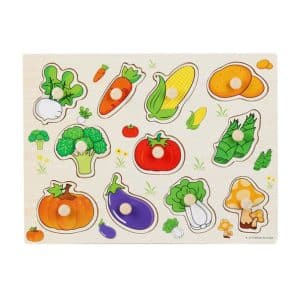
Jigsaw Puzzle Hand Grasp Plate
Original price was: 290৳ .270৳ Current price is: 270৳ . -
Busy Book
Price range: 1,350৳ through 1,450৳





Reviews
There are no reviews yet.